A recent visit to a small independent bookshop in small town Wisconsin put me in conversation with its book buyer/staff member/owner. She told me, among other observations of her community life as a literary light, that there is a dramatic increase in shoppers seeking books brought to their English reading awareness through translation. “They’re looking for translations of stuff for every age and interest group,” she noted.
“A constant preoccupation for translators is keeping to the author’s intention, yet this also needs to balance with the reader experience. ‘As a translator, I guess you’re always kind of juggling between your loyalty to the author, what the author’s written and how they write, and the reader’s experience,’ [Ros] Schwartz said. ‘…what you’re trying to do is to get as close as possible to the author’s intention to evoke, in the reader of your translation, a similar response to the readers of the original text, whether that’s making them laugh, making them cry, whatever it is’.” Heather Gosling writing in The Bookseller, 28 July 2026
Do dogs really sound different around the globe? Certainly the way humans imitate the sound of the bark they hear differs from language to language: from the American English “woof” to the Portuguese “au,” the Turkish “hev hev” and the Indonesian “guk.” The sound we humans make to imitate what we think an animal voices is an example of onomatopoeia and onomatopoeia more broadly is a handy—and fun—linguistic tool that crosses cultures and languages to be used in verse with high appeal, or even written for, kids. So…
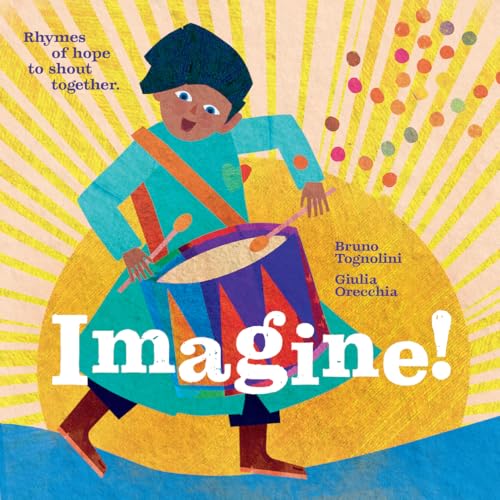
IMAGINE! Rhymes of Hope to Shout Together requires the translator to bring their onomatopoeia along for the ride from, in this case, Italian, to English speaking kids. The Red Comet Press edition of Italian children’s poet Bruno Tongolini is transported to English to English by Denise Muir. Just like the book’s illustrator, Giulia Orecchia, Ms. Muir’s translation contribution is meaningful to those reading it. That is just one of the talents and skill sets the best translators bring to their work. As the School Library Journal reviewer notes: “Many of the lines feature precise rhyme, and those that don’t still flow seamlessly with rhythm and sound, proving the skill of the translator and the poet alike.”
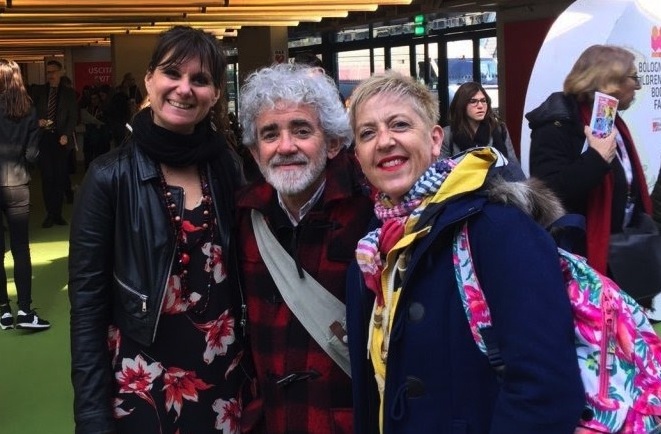
Denise at the Bologna Children’s Book Fair (right) with IMAGINE!’s author Bruno Tongolini (middle). Photo courtesy of Denise Muir
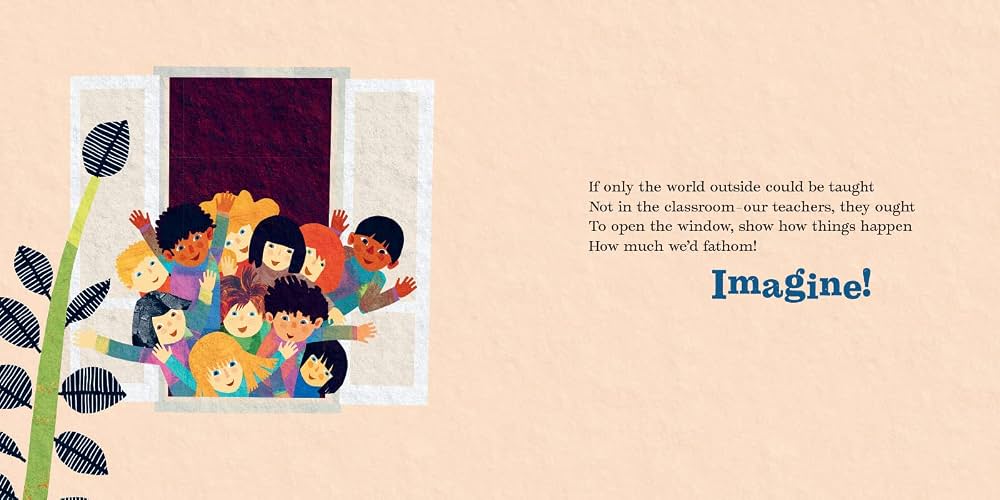
“If only the world outside could be taught Not in the classroom-our teachers, they ought To open the window, show how things happen How much we’d fathom! Imagine!” IMAGINE! page text
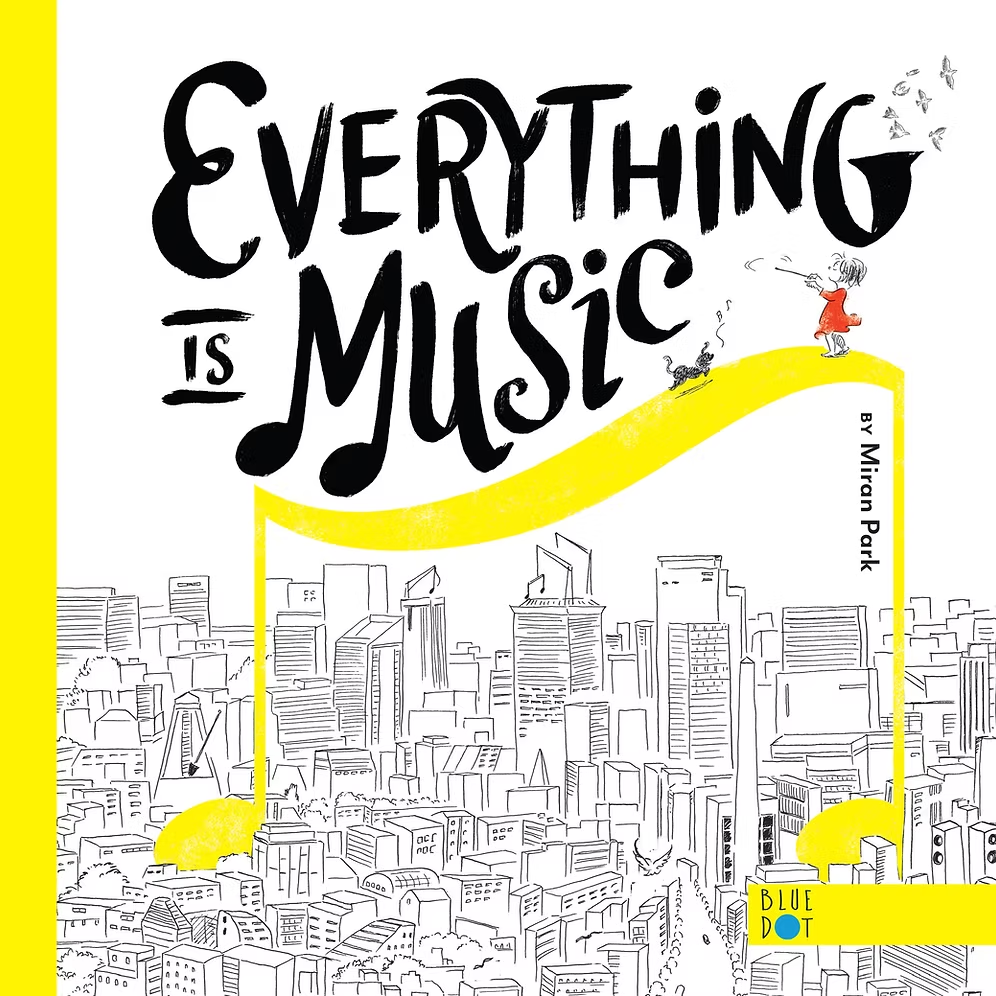
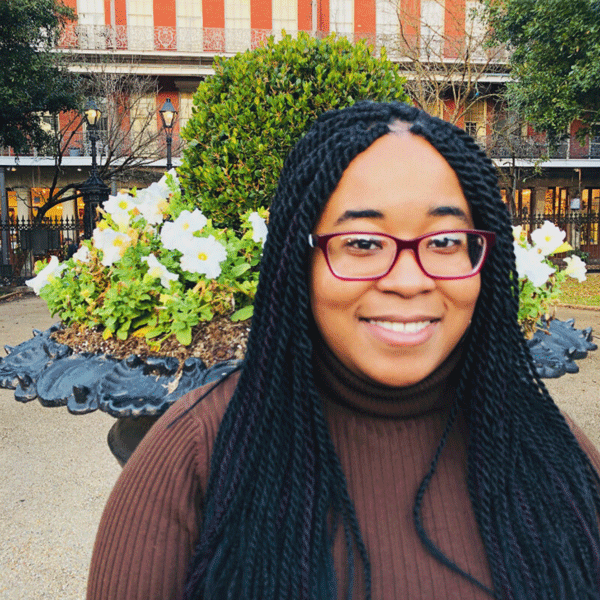
Another type of non-human noise that humans spell out imitatively that varies from language to language is that of ambient sounds—whether that of a particular birdcall or the soundscape supplied by passing traffic. Yes, EVERYTHING IS MUSIC so who carries those sounds from the original Korean to English reader/listens? Miran Park’s picture book is made available to English-speakers and listeners through publisher Blue Dot Kids Press employing the talents and care of translator Paige Aniyah Morris. While the picture book has collected reviews to entice and engage readership, Ms. Morris’ work receives little notice as such. Yet, it’s integral to domestic appreciation of this linguistic import.
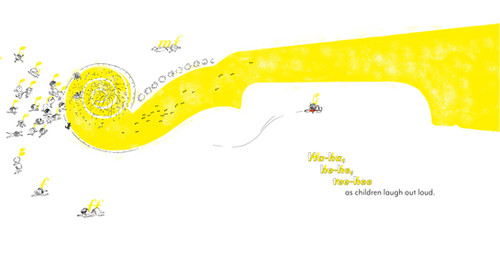
“Ha-ha, he-he, tee-hee as children laugh out loud!” EVERYTHING IS MUSIC page text
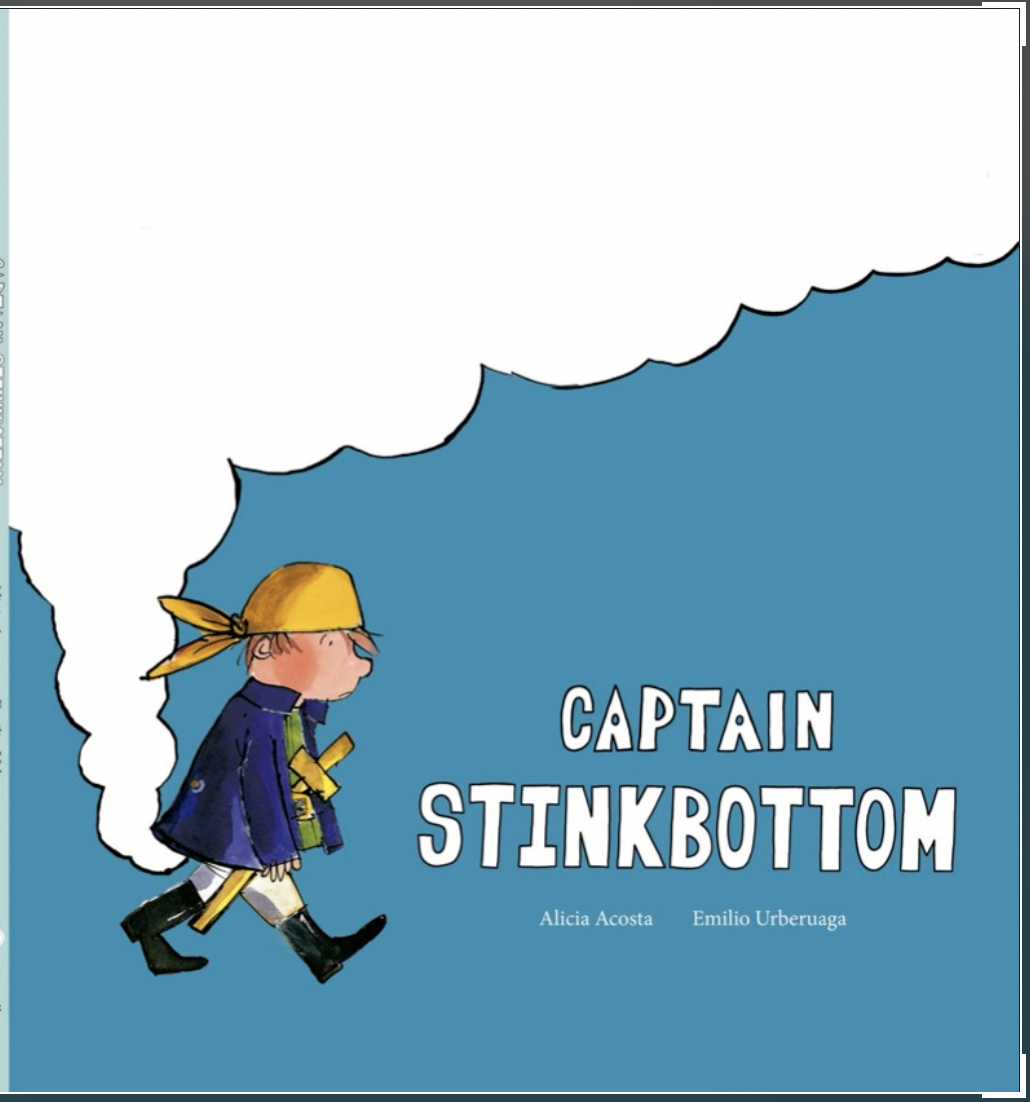
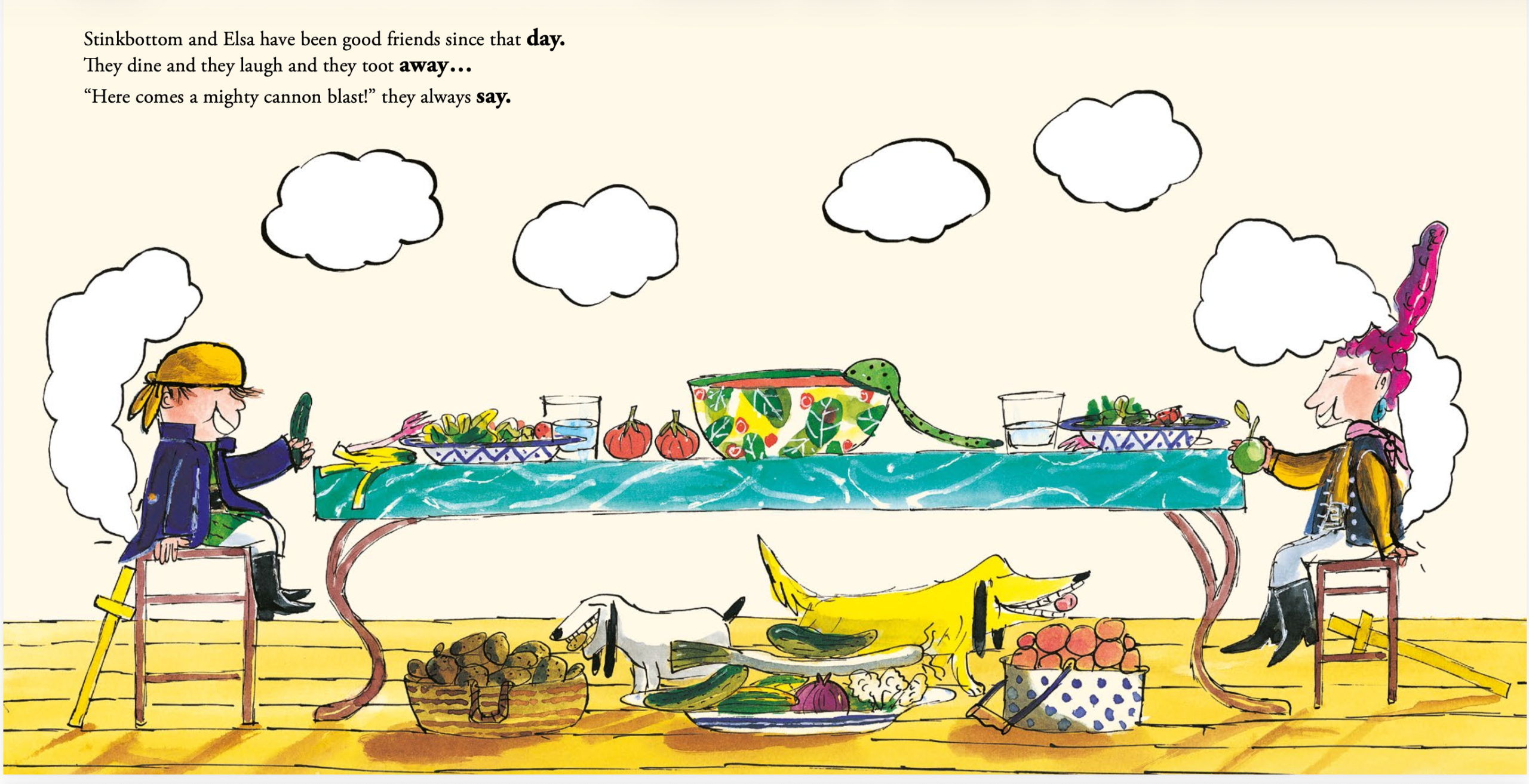
Kids of a certain age have a fascination—and delight—in bodily functions, which come in a range of sounds as well as, well, smells. Alicia Acosta’s CAPTAIN STINKBOTTOM, illustrated by Emilio Urberuaga, plays to both these angles and does so with word play all the way through puns, another translation feat. Publisher NubeOcho credits the seemingly indefatigable Cecilia Rosswith another example of her capacity for giving both book and reader their due. Puns rely on linguistic agility that recognizes a play on words and, as a translator, she transports that play from one language’s words to another, all giggles—and eyerolling—intact.
Translator Cecilia Ross
“Stinkbottom and Elsa have been good friends since that day. They dine and they laugh and they toot away… “Here comes a mighty cannon blast!” they always say.” CAPTAIN STINKBOTTOM page text
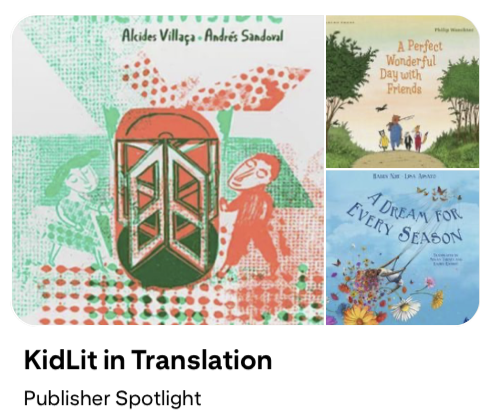
Yes, American readers of every age are interested in access to stories from beyond their own lingual knowledge. So, let’s give the translators their due, just as we do illustrators of these picture books. Check out our Pinterest board of KidLit in Translation and celebrate this fine art.
Cookie Consent
We use cookies to improve your experience on our site. By using our site, you consent to cookies.
Used to distinguish new sessions and visits. This cookie is set when the GA.js javascript library is loaded and there is no existing __utmb cookie. The cookie is updated every time data is sent to the Google Analytics server.
30 minutes after last activity
__utmc
Used only with old Urchin versions of Google Analytics and not with GA.js. Was used to distinguish between new sessions and visits at the end of a session.
End of session (browser)
__utmz
Contains information about the traffic source or campaign that directed user to the website. The cookie is set when the GA.js javascript is loaded and updated when data is sent to the Google Anaytics server
6 months after last activity
__utmv
Contains custom information set by the web developer via the _setCustomVar method in Google Analytics. This cookie is updated every time new data is sent to the Google Analytics server.
2 years after last activity
__utmx
Used to determine whether a user is included in an A / B or Multivariate test.
18 months
_ga
ID used to identify users
2 years
_gali
Used by Google Analytics to determine which links on a page are being clicked
30 seconds
_ga_
ID used to identify users
2 years
_gid
ID used to identify users for 24 hours after last activity
24 hours
_gat
Used to monitor number of Google Analytics server requests when using Google Tag Manager
1 minute
_gac_
Contains information related to marketing campaigns of the user. These are shared with Google AdWords / Google Ads when the Google Ads and Google Analytics accounts are linked together.
90 days
__utma
ID used to identify users and sessions
2 years after last activity
__utmt
Used to monitor number of Google Analytics server requests
10 minutes
Marketing cookies are used to follow visitors to websites. The intention is to show ads that are relevant and engaging to the individual user.
A video-sharing platform for users to upload, view, and share videos across various genres and topics.
Registers a unique ID on mobile devices to enable tracking based on geographical GPS location.
1 day
VISITOR_INFO1_LIVE
Tries to estimate the users' bandwidth on pages with integrated YouTube videos. Also used for marketing
179 days
PREF
This cookie stores your preferences and other information, in particular preferred language, how many search results you wish to be shown on your page, and whether or not you wish to have Google’s SafeSearch filter turned on.
10 years from set/ update
YSC
Registers a unique ID to keep statistics of what videos from YouTube the user has seen.
Session
DEVICE_INFO
Used to detect if the visitor has accepted the marketing category in the cookie banner. This cookie is necessary for GDPR-compliance of the website.
179 days
LOGIN_INFO
This cookie is used to play YouTube videos embedded on the website.
2 years
VISITOR_PRIVACY_METADATA
Youtube visitor privacy metadata cookie
180 days
You can find more information in our Cookie Policy and .