This is one in our Double Scoop Sundae series featuring a pair of thematically-related books and ideas for teachers and library program developers seeking ways to extend reading from them.
Mathematics in its many forms—arithmetic, geometry, algebra, calculus, and more—comes with rules that can seem daunting. In fact, those rules can be both imagination-provoking and fun! In the case of these two math-focused kids’ books, there’s much to chew on that also can be delicious.
Bring on the Pi(e)
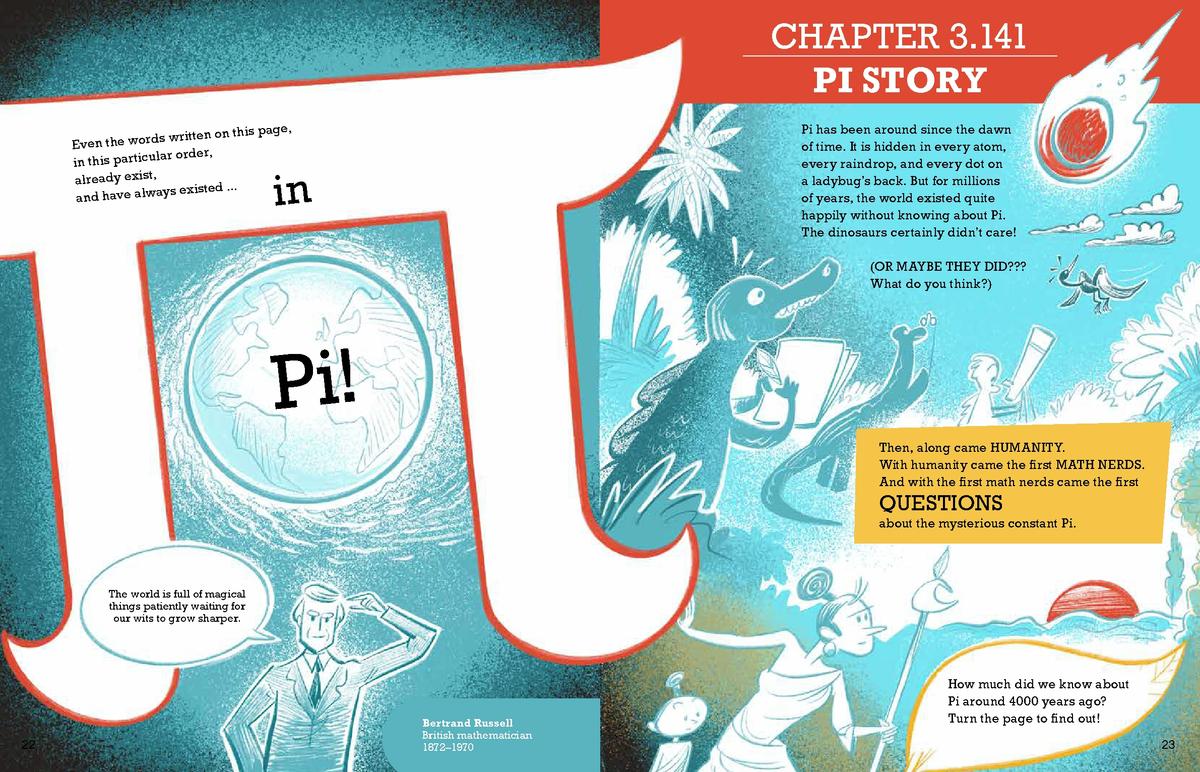
March 14 may come but once a year but oh, my, it brings a lot of numbers with it! That’s because it’s the annual celebration of Pi Day, first introduced in 1988 at San Franciso’s science-themed museum, the Exploratorium, and designated by UNESCO, in 2019, as the International Day of Mathematics. Why March 14? That funny little (as in huge) math concept begins with 3.14. In using this math formula to express its meaning in a formula, that concept is wrttien as the Greek letter π which is pronounced…you got it: pi (or “pie” for those who celebrate Pi Day with the obvious food group).
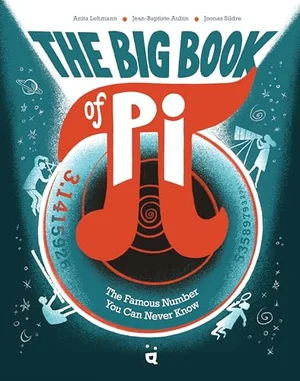
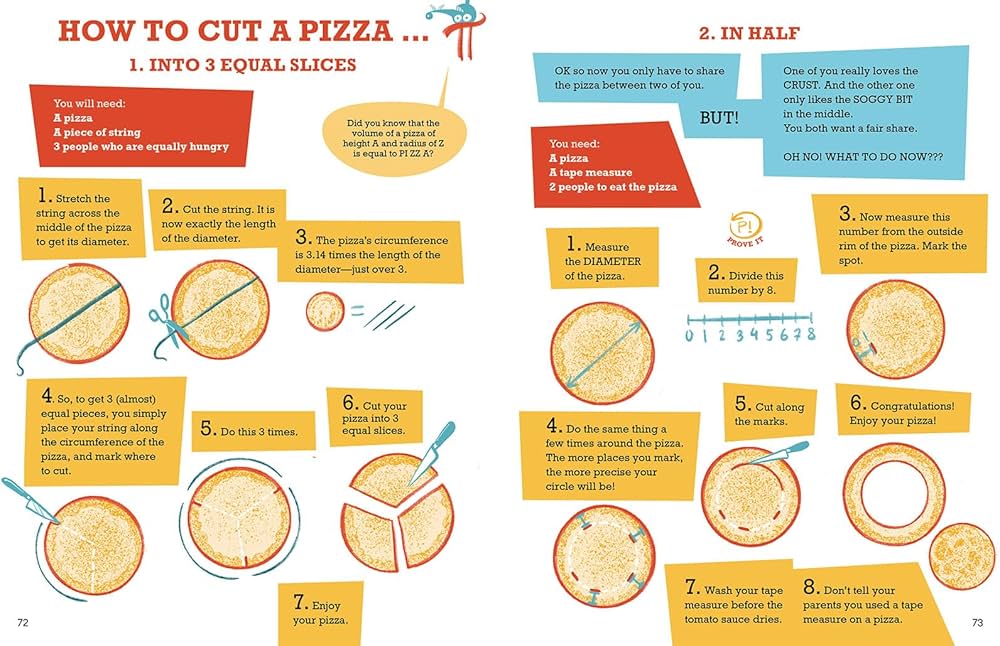
Pi, or π, is a mathematical discovery made thousands of years ago to show the relationship of the diameter to the circumference of a circle. Of course, it hasn’t always been called π. In addition to its name and the role π plays in our lives (even for the many of us who are not mathematicians), THE BIG BOOK OF PI: The Famous Number You Can Never Know explores how the use and expression of it developed across cultures. Pi addresses many practical concerns—all while it is itself endless in the number of integers that follow that decimal point! Written by Anita Lehmann and Jean-Baptiste Aubin, illustrated by Joonas Sildre, and published by Helvetiq, middle grade-friendly THE BIG BOOK OF PI presents this extraordinary topic starting with the end papers which are lined with the first thousand or so numbers in the unending series of integers that come as we parse the formula. Readers can find out why π, as the book’s subtitle says, is “the most famous number you can never know” and then immediately apply π to useful tasks which, mathematician or not, we can all undertake with it, including apportioning pizza fairly among three friends. Plus, the book contains highly accessible, pun-laden jokes and astonishing trivia!
Missed the March date? Your next opportunity for a date with a π tie-in is Pi Approximation Day on July 22, expressed with the day first and then the numeric name for the month (7). Why? Write the formula 22/7 (which means, in math-speak,“22” divided by “7”) and the result is pretty close to π.
The Geometry of Dessert
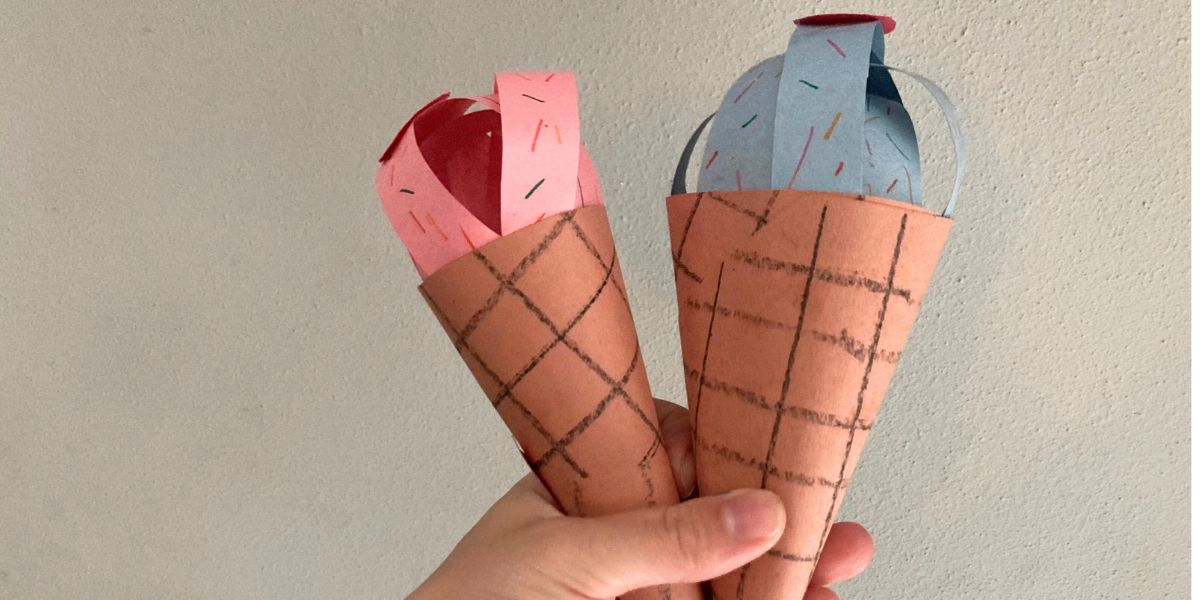
Since Pi Approximation Day will happen in summer, who wants ice cream? More particularly, how about an ice cream cone?
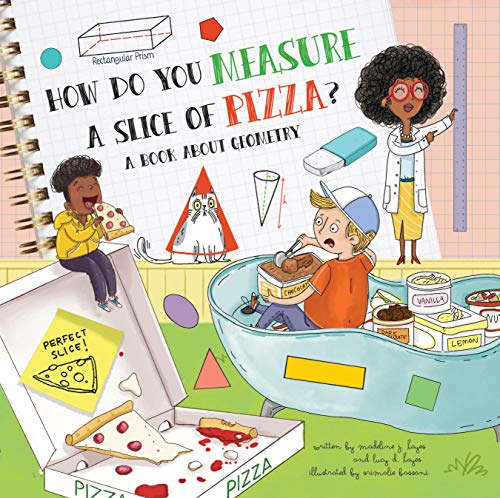
We saw the usefulness of π at center stage, and that’s reviewed again in another geometry-forward book for a slightly younger crowd. HOW DO YOU MEASURE A SLICE OF PIZZA? by Lucy D. Hayes and Madeline J. Hayes, illustrated by Srimalie Bassani, published by Flowerpot Press, is among their “How Do…?” series of STEM-themed books for elementary school kids. There’s more to geometry, of course, circles, π, and pizza. Geometry handles solid forms as well as flat ones. Geometry’s application to food measurement here thus takes off into further delicious realms including ice cream cones. Learn about shapes that have volume including balls (scoops) and cones (Do you prefer sugar cones or waffle cones?).There’s humor here, too, especially in the colorful cartoony illustrations that share space with good clear diagrams of shape and volume depictions to match their mathematical names and how their dimensions relate within each one’s definition as well as to one to another.
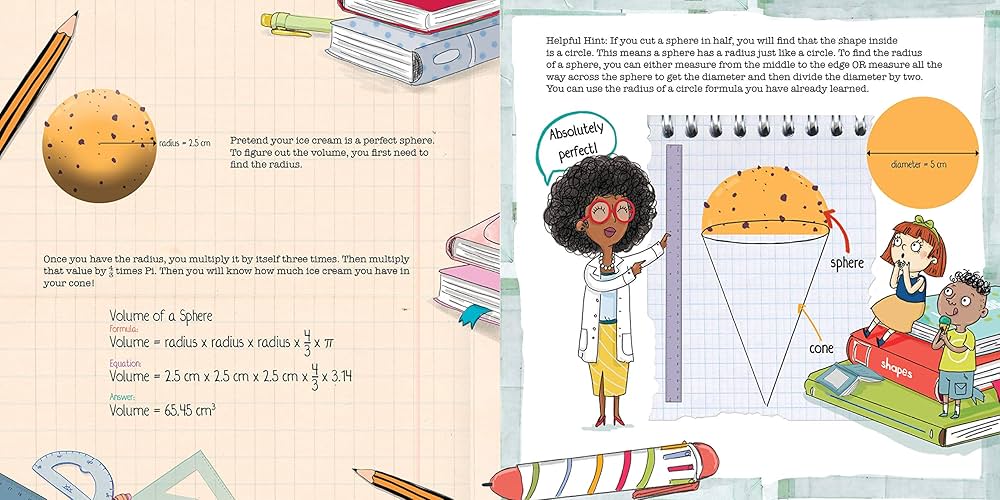
Together, this pair offers a full menu of helpful insights on math that seems both mysterious and practical. As well as pretty tasty!
Make Yourself (and Your Friends) Great Big Ice Cream Cones
Speaking of tasty, who wants to make an ice cream cone?
You’ll find the simple directions right here.